Friday, July 5, 2024

My Running Reset

 Without going into my decade+ of running in great detail, let me related the TL;DR version:

At the end of 2009 I was 235lbs, and tired of it. I started running as a different way to try and lose weight from my methods before. I also counted calories. I started this plan in early 2010, joined a running group, and targeted the Disneyland 1/2 Marathon as my target event, with the goal of getting healthy, running the half, and being done with it. Turns out I loved running, especially trails, and intervening years I've run 5k's all the way to a 72 mile Ultra, and multi-day Running events like the Dopey, and other challenges. In late 2019 I burned out, and have been struggling ever since. I decided I need to go back to square one and target a 10k, and try to reignite that passion for running I know I still have.


I hope you'll join me!

To that end, I've created a Strava Club to chronicle my efforts, and to encourage anyone else who'd like to join for the ride. See you out there!

Monday, June 10, 2024

Let's talk about some trails


I was asked a simple question yesterday, while on a social run, and as per usual, in my own inimitable style, provided an info-dump as an answer... So why not write about it?


The question was - "What is the 'gateway drug' for trail running?"


On the surface, this is a simple question - I interpreted it as "What local trail is accessible enough for a beginner, with sufficient natural beauty to entice the novice to seek out more..."


I almost immediately started talking about the Ditch Trail, starting out from Horseman's Park. It's centrally located in Reno, mostly flat, and great for not only short distances, but also longer ones. But then I talked about the Ditch Trail at Woodchuck & Plateau, and then Hunter Creek, and Evan's Canyon, Hidden Valley, Dry Pond, and so on, and so on, finally culminating with a recommendation for Galena Creek - but not at the Visitor's Center, but a starting point well below it, off of 431 - it's a nice, fairly flat, shaded (mostly) trail along the creek. And if you want more, you can go under a bridge and follow the trail for another mile or so, or divert along the road for about a mile to another trailhead, and go out for miles and miles...


We truly are lucky to have so many great trails in the area, and that's not even including Washoe Valley, Carson City, and the Lake...


So without further ado, here's a list of trails with links and descriptions. Enjoy, and I hope to see you out there...


Here is a Google Map of all the trailheads I know about in the area. If I've missed some, please let me know and I'll get them added ASAP.

Horseman's Park - Near the intersection of Skyline & Pioneer is a little park with a small arena that can be used for horses, hence the name. You can park there, or just below the arena is a larger dirt lot you can park in. You can catch the Steamboat Ditch Trail south, for a little over a mile, where you'll hit Manzanita, and from there on you're on the street. If you head North, you'll cross the street and then head west/northwest, for as far out as you like. The trail is only partially shaded but hit it early or late enough in the summer and you'll be fine. Keep the canal on your left as you're heading out, and on you're right when returning, and it will be difficult to get lost. There are a few street crossings, but most are easy enough to spot. The challenging one is at mile 2.5-ish - you come out on Susileen, then need to head North on it for about .1 miles to Meridian, and then go West on Meridian for slightly under another .1, where you'll catch the trail again. The only other "odd" crossing is at around mile 3.5, where you enter a homeowner's property and follow the driveway west to Southhampton, where you cross and get back on the trail.

If I recall correctly you can follow the trail for about 8 miles west, after going under McCarran, and then you'll hit a hard fence-line. A property owner constructed a fence across the ditch trail and successfully lobbied local government to bar public access to the trail across his property. Before you hit the hard fence there is a "jog" you can take to get down to Plateau, which you can then follow West to intersect with Woodchuck, and begin again on the Steamboat Ditch Trail.

Which brings me to...

Woodchuck & Plateau - There's a small lot along the north side of the road, just after the corner. You can start here and head west for at least 7 or 8 miles, until you hit a hard fence near Verdi. The trail is a dirt road along the canal, and is not shaded. Again keep the canal on your left going out, on your right coming back. 4 miles out there's a local landmark called "Hole in the Wall", where there literally is a large hole cut through the hillside to allow the canal through. You can hike west up the hill and back down to continue west, or bear east at the top of the hill to head back along a slightly more challenging trail. It's hillier and ends with a fire road that goes along some power line towers - hence it's name "power line road". Some interesting spots along the trail out to Hole in the Wall - at around mile two, you can cross the canal and catch a trail South, which will take you up to Hunter Creek/Michael D Thompson Trailhead. We'll talk about that next. At around 3 miles or so you'll intersect a trail that will take you North, down to the "Tom Cooke Trailhead" where you can intersect the river path if you like.


Hunter Creek/Michael D Thompson - Continue West up the road on Woodchuck for a mile or so and you'll see the parking areas for the trailhead. Be warned - I've never had any trouble parking up here but people have reported break-ins over the years, so keep your valuables in the trunk and out of sight. Head West from the parking lot, beyond the creek crossing, and you'll see the trails to the north that take you down to the Ditch Trail. Keep heading west, then South, and you'll begin an ascent that will take you three miles out to a very nice waterfall. I advise hitting this one early, as it can get quite crowded on weekends and during the summer - it's a very popular trail. It's a decent 3 mile grinder up to the falls, but it's well worth it. There are a couple of sections where you cross shale & boulders, but they're short and fairly stable sections.


Galena Creek - Follow Highway 431 West towards Mt Rose, and turn South onto Callahan. Follow Callahan a couple of miles South until just after Brookmeadow Lane. You'll see a parking area on the right. The trail heads West along the creek, and is mostly shaded. It is a gradual uphill, but there's no really difficult steep sections. You can follow the creek trail all the way out to almost Mt Rose Highway, but if I'm looking for more distance I usually hit Joy Lake Road at mile 1.5 (the trail continues on, under the bridge) and take Joy Lake Road South for about a mile, where you'll hit the Brown's Creek Trailhead, which, you guessed it, we'll talk about next. Galena Creek trail is one of my favorites for a short almost in-town trail.


Brown's Creek- From the bottom, it's a pretty good grinder up to a marker for "Sundown Town" (unfortunate name), about a mile and a half up. From there, You can hit trails that'll carry you South, then West, all the way up to Slide Mountain, if you like. (I've never been that nuts). You can also intersect the trail System at the Galena Creek Visitor's Center (https://www.strava.com/activities/2418655811), which I highly recommend as well. Since they are a few miles up Mt Rose Highway I didn't include them in this list, but they're worth a visit.


Evan's Creek/Rancho San Rafael - Going North on Virginia St, just Past McCarran, you'll see the Reno Sports Complex. Park at the far Western edge of the parking lot, and you'll see the trailhead off to the North. There are many options here - run West, heading down the hill past the Basque Monument, and you'll hit the trail system. You can run North, and stay low and close to the creek on the East site, or follow the Western side of the creek for more hilly options. At the North end of the creek, about a mile and a half from the parking lot, you can take some switchbacks up to the fire roads and trails to Keystone Canyon, Hogue Road, and beyond for many miles. A lot of the trails back here are part of the Silver State 50/50 course, and are your standard Nevada Desert fare - beautiful, but not so shady. One of my favorite loops is 6 miles - you head South at the bottom of the "Basque Monument Road", and run until you get to the tunnel that leads to Rancho San Rafael. Head west up the trail to a parking lot adjacent to McCarran, then follow the trail again North until you get to the intersection with a hill. Take the hill West/Northwest, and follow it North until you get to the switchbacks. Take the switchbacks up until you hit the fire road system, then take a road West, then South. Follow it up and over, past a power transfer station, then follow it South until you catch a trail Southeast back up and over to the park again. this time take the trail South until you get to McCarran, then east and back down to the tunnel entrance. From here you head north until you hit the road that takes you back up to the monument, and the parking lot. The link at the beginning of this description is that route.


Hidden Valley - On the Eastern side of town is a whole range of trails, from mostly fun to some steep climbs. My advice would be just start on one, and keep going up! But that's me...


Huffaker Hills - You can park at the Trailhead on Alexander Lake Road, or for more fun park at the Starbucks near Longley and McCarran, wind your way out to Double R via Barron Way East/South, then Corporate Dr West/South, head South on Double R, and find the fire road about a mile up that heads East up into the Hills. When you get to the top, bear South and up until you get to the lookout for a great view... Then when you head back down, you can follow Alexander Lake Road to McCarren, then go back to Starbucks, or do like I do and take the trails back down to the end of Barron and South back to Longley/Starbucks. It's fun!


Pinehaven - Last but certainly not least is a great system of trails on the West side of town, called "Pinehaven", at the top of Pinehaven road. Go figure. There's parking at the trailhead, and then you can head up West to hit a variety of different choices for trails. It's a fun place to explore.


Whoops! How could I forget Dry Pond? - Head up 431 towards Mt Rose then make a right onto Timberline. Follow it North for a few miles until you hit the trailhead. Don't stop at the parking area before you cross the creek, that's for newbs. Continue another .1 miles until you get to the trailhead proper. Head West then up/South/Southwest to the top, 3 miles up to "Dry Pond", then continue Westward then down for another 3 miles or so for a nice loop. There's water, shade, and hills. What more could you ask for?


That should be plenty to get you started. Now go hit some trails and next time I'll talk about Tahoe & Carson City!


PS: a great way to find trails is to look at other peoples trail runs on Strava and see if anything strikes your fancy. I've found several that way.

Sunday, June 2, 2024

Displaying Medals...

For years, I've not displayed my medals. I've got quite a few, but have never settled on a satisfactory way to display them. I have a "Medal Hangar" style display rack, but I've never been a fan of having the ribbons just hanging there. They take up a lot of real estate that could be displaying more medals...


A friend found a project online that had the maker wrapping the ribbons around a rectangular canvas, for his wife, who stored her medals tossed into a bucket. Great Idea, but they didn't hang very well (in my humble opinion). I can't find a reference anymore for that project, but it looked similar to this:


Off and on over the years I had different ideas for hiding the ribbons. Draping them behind wood and mounting that to the wall.

Other ideas were lotted wooden backers and tucking the ribbons behind the wood slots, and variations of that. Nothing ever manifested from those ideas though. A few years later I entered a series of races called "The Auburn Resolution Run". For 6 consecutive years you ran on New Years Day, and received a medal each year, to spell out "A-U-B-U-R-N". What was interesting was the medal holder they offered:


It was constructed in such a way that the ribbons folded into a space between the backing of the ribbons and the back of the display. It was an extremely clever and good looking design, created out of several layers of laser-cut wood. I didn't have a laser cutter, but I thought about creating something similar by hand. It never manifested. But...

I did find myself with a 3D Printer. While researching designs, I came across this 2-part Hexagonal Design, made out of wood:

At the time, there weren't any other companies offering these (the image and link are not the original one I found; That one is lost in time). Now they are available all over the internet, at all levels of price (and probably quality). I even tested some designs of my own, and prototyped some out of cardboard from PonokoPonoko, but I could get it quite right.  One day, while browsing Etsy, I came across this design, for 3D printing:


It's a good design, hides the ribbon like I want, and since I did have a 3D printer, I bought the file and printed it out. I managed to print out enough di display my Disney Dopey Challenge Medals:
Even though the seller provided different sized holders, they take up quite a bit of real estate because of the Hex shape. I loaded the file into Tinkercad, made some modifications, and remixed it into a rectangular holder, and printed it out:


I liked it. It was aesthetically pleasing, took up less space, and I could produce them myself for a few cents of 3d filament each. But soon after, my 3d printer stopped printing well, and the project went on the back burner again...

In 2023, on Black Friday, I scored a great deal on an Ortur Laser Master 3 diode laser engraver/cutter. And after a few test cuts & engraves, I promptly put it away... there's seems to be a pattern here lol. But a few weeks ago I was again browsing Etsy, and came across this listing for a laser-cut hexagonal medal holder that comes in 2 halves held together by magnets, keeping the ribbon in a central chamber: 


I bought the file, made some test cuts, and while it works well, but again it's a hexagon, and takes up more space than I want. I couldn't find a rectangular one for sale. I set about creating some prototypes in Lightburn, and settled on:


I liked it; I felt I was on to something. I made a few more:


They are comprised of 6 layers of 3mm birch ply. Not including laser wear & tear, I can crank these out for around $1.33US each (.91 on sale) unfinished. So for now, 5 down, several hundred more to go :-)


If I can get a good deal on 3mm black acrylic, I may even pursue a plan to use more Hexagons for displaying my Star Wars Disney Race medals... :-) This is merely a sampling; there are a few more that I have:


One of these days.... 

Tuesday, March 5, 2019

Advice for getting back into running...

Well, it's only been forever, but recently a question was asked and answering it here seems like as good a place as any, so brace yourselves for an incoming wall of text...


 Recently a friend asked about advice for getting back into running after a long break; essentially starting as a new runner. I immediately starting formulating a bunch of suggestions, but then decided I wanted to take a day or two to compose something a bit more organized and meaningful. Then I did a little working, and travelling, and I realized a week later that I'd composed nothing... So here we go with take 2, hopefully I don't ramble too much. :-)

First things first, I'm not a professional coach, or any sort of trained advisor. I'm just a guy who's been running steadily since 2010, and have put in lots of miles (about 10,214, as of today!). I've done a few things right, and a lot of things wrong, so it's my hope I can inspire others and help them not make the same mistakes as I have. And remember, ask 10 runners the same question, and you'll get 15 different answers. ;-)

That being said, most of the advice herein is what's worked for me, and quite often, what I've seen work for others. I forget where I heard it, but a great piece of advice is "look at someone who's successful, and do what they are doing". Whether that's mimicking a graceful runner's form that I see in a race, or looking at a training plan from an ultra-runner I admire, to following a nutrition plan of a successful health advocate, mimicking a successful person has helped me figure out what might be helpful   to me.


So you've decided to start running. Or start running again. What's the first thing you need? Shoes? Running clothes? A GPS watch? You might need all of these things, but I think the first thing you need is a goal. A concrete one. By creating a definite goal, it allows for planning of strategies and smaller goals to achieve the bigger one. The big one for me is a race. By deciding on a specific race and distance, it sets a timetable for training. When choosing the race, it's important to balance distance vs time for training - that is, it's probably not realistic to train for a marathon in 6 weeks, if you've never done one, but a 5k is highly doable. So go choose that race, ideally 10-12 weeks out, along with that distance. Anything from a 5k to a 50k. Yes, that's right - I believe it's not unrealistic to train for a (reasonable - ie "mostly flat") 50k in 12 weeks. It may not be your fastest, but it can be done. Also, you shouldn't be too focused on "time" either - the goal here  is to choose the race, and train to arrive at the starting line prepared, and not exhausted from over-training, and racing it at a pace that lets you finish with time to spare and feeling strong; not running it so hard you're miserable the whole time and want to burn your running shoes afterward.

Got your race? Got your distance? What's next?

Shoes. You need good shoes. But just like everything else, there's no "one shoe fits all" solution. Shoe choice depends on a variety of factors - such as your type of stride, do your feet pronate or supinate, do you run on street or trail (spoiler, do both - I'll discuss why later), your body weight, and less tangible things like "feel" - shoes should be comfortable and *not* need a break in period. If they do, they're the wrong shoe for you. I highly recommend getting a "gait analysis" done. Most running stores will look at your running style and stride on a treadmill, sometimes even taking video, to see what kind of shoe would most benefit you. Try on several pairs, and run a lap or two around the parking lot of the store. If they won't let you, leave and shop somewhere else. Ask about their return policy. If they won't let you return shoes after you've put a couple miles on them, again, leave and shop somewhere else. A good running store will let you test shoes out, and return them as long as they are reasonably like new.

Ok, got your shoes? What else do you need? A few technical shirts, shorts, leggings, etc. I can't advise on this as much because again, everyone is different with their personal preferences. Avoid cotton or cotton blends. You want technical fabrics that wick moisture away - because moisture can lead to chafing. For socks, I'm partial to Balega, but Smartwick has served me well also. Again you want to avoid cotton or cotton blends. You'll need a hat, and or a visor. In the summer moths I prefer a visor, because I combine it with a Buf - doing so allows me to dump water from creeks on the top of my head for a quick cool-down, and I can use it to shade the back of my neck as well. Most runner-style hats don't provide that type of shade, unless they are specifically designed to. Speaking of Bufs - get one. Get several! I use them as neck scarves in the winter and as shade or "cool rags" in the summer. They are extremely versatile. Along with that I suggest a beanie or two for winter, and a hat and visor for summer. For winter running, layering is extremely important. As you run, you'll usually warm up, and can shed a layer or two, and if it gets cold again you can easily put those layers back on. Typically I'll run with a beanie, Buf, long sleeve under short sleeve, shorts with calve sleeves, and gloves. I also have a lightweight jacket and vest that can be tied around my waist or compacted and put in my pack if I get warm. Same for the beanie. If it gets warm I'll stuff it in a pocket and use my Buf as a headband instead of a neck warmer. I can also pull my sleeves up and down to adjust my comfort, as well as shed it altogether and tie it or stash it, just like my jacket.

What about equipment? I recommend a GPS watch, such as a Garmin 235. It's simple enough to not involve lots of fussing with when you're out running, and sophisticated enough to track stats you may be interested in, such as Heart Rate, sleep patterns, steps, etc. It can also integrate into sites like Strava.com, and Connect.Garmin.Com, which will allow you to look at a map of your run, and see the data associated with it as well. These sites and others such as Dailymile.com also add a social aspect to running, and can be a source of inspiration and support. I also use Strava to see new trails and routes. Why have a dedicated watch when a phone can do the same thing? Good question - I like to keep things simple - I use my phone as a camera, and leave it in airplane mode to preserve the battery. I'll often not have a signal when I'm out running, because I'm on a trail far away from the nearest cell tower. It keeps things simple for me. Which is why I usually don't listen to music, audiobooks, or podcasts either. I used to, but having to mess with the player or app, or the headphones, etc became a complication when I was trying to keep things simple. Most of the time now I run without music and just think, observe, and run.

Besides a GPS watch, what else? I always recommend a water bottle. Either handheld or in a pack. I'm partial to the Orange Mud Hydraquiver Double Barrel series. It lets me carry up to 5 20 ounce bottles of water (but that's a rare case; it's usually 2 for most runs). Having a bottle vs a bladder makes it simpler for me to refill at an aid station. With a pack & bladder you have to remove it, open the bladder, and hold it out for the volunteer to fill. With a bottle, it's much easier to just unscrew the lid and hold it out for a top-off or refill. I'll touch on hydration needs later when I discuss nutrition, but one thing I always do even in races, is carry my own water and food. That way I only need to hit the aid stations if I absolutely need to, and that saves a fair amount of time. And by carrying my own supplies, I won't be surprised by anything they have or don't at an aid station.

You may also want to look at getting a foam roller. They can work miracles with post-run massaging those sore muscles.

Ok, so can we get to actually running now? Let's go! You have your goal race, you have your training plan. Anything else before you head out the door? Nope! Go run! But here are some things to keep in mind when you're out there:

Pace - how fast should you be running? As you start, inevitably you'll start too fast. When you have a couple of weeks of runs under your belt, you'll be able to gauge your effort, but for starting out, I like to use what's called a "conversational pace", meaning you should be able to carry on a conversation and breathe fairly normally as you are running - a light effort. A step above this would be still able to talk, but maybe only one or two sentences at a time - a strong effort. Ratcheting it up even more would make talking difficult; that would be considered a hard effort. Ideally your pace should be fast enough that you feel like you got a good workout from the run, but not so much so that you are "tanked" at the end. You shouldn't be nauseous, dizzy, or in severe pain. Generally if you think you're working too hard, slow down, and if it feels to easy, step it up. You'll eventually find that happy medium. As far as setting a pace for your goal race, I recommend focusing on finishing strong, not necessarily fast. It's all about doing the distance. Speed can come later, if that's another goal. Most races publish the cutoff pace - the pace you have to run at at a minimum to officially finish. A lot of races set that at 16 minutes per mile. That's a brisk walking pace. A leisurely walking pace is around 18-20 min/mile. While you certainly can set your pace at whatever the cutoff is, I'd rather see that pace focused on a few minutes under that. 12 to 14 minutes per mile, or even faster, depending on the distance. Again, as you progress in your training you'll dial in what your goal pace for the race will be, but don't make that you're all or nothing for the race either. Remember, you want to finish it strong, so don't pace it faster than you can handle!

When to run - that can be a challenge, depending on your schedule and the seasons. In cold weather you can dress warmer, but when it's hot out, you can only dress down so far, then that's it. You're not dressing any cooler. I like to run in conditions as close to my races as possible, to the best I can. But the bottom line is do whatever works best for your schedule. For me mornings are preferable because I can run on an empty stomach or with a minimum amount of food, whereas if I'm running in the evening, I have to be more careful about lunch because I hate running on a full, heavy stomach.

Speaking of food, what do you eat while running? Generally for anything 4-5 miles or less, I'll just run and not worry about nutrition. Except for races - then I'll usually fuel up before. Your liver can store around 100-300 calories, and you burn about 100 calories per mile of running. So in general you can run without worrying about fuel for up to 5 or 6 miles. For anything longer than a few miles, I'll fuel up before the run, and then every 4-5 miles, or 45 min to an hour, depending on how I'm feeling during the run. Use your runs, especially your long runs, as opportunities to test and dial in what works and what doesn't, so you'll be ready with a plan on race day. For me, I swear by gels, usually GU brand. There's others I like, and some I loathe (like Vespa - tastes like cough syrup to me). Gels are easy to pack, and easy to eat, except when it's really cold out; I'll usually try to hold them for a bit in my glove to warm them up. It's important to remember to eat them with a slug of water - it helps to quickly digest the gel and get that glucose into your bloodstream. Some folks say they get an upset stomach when they eat gels; that's fine there are lots of other products - shot bloks, sport beans, waffles, etc. Try everything and see what sits easily, tastes ok, and most importantly, fuels your run. Don' forget to have something after your run as well. There's a 15-45 minute window after a workout where your muscles are primed to take in nutrition. It's called the "uptake window". I usually like to have chocolate milk, or a protein shake after I'm done running.

Earlier I mentioned carrying a water bottle. Hydration is important! You should be sipping 2-4 ounces (about a mouthful) every mile, even in cold weather. You're always sweating, even if you don't realize it. And in warm weather, it's even more important. Adequate hydration can make or break your run when it's hot out. Again this is something that will need to be dialed in with your individual needs, but a good baseline is 2-4 ounces per mile. For myself, I know that generally I'll go between 5-7 miles on a 20 ounce bottle, depending on the weather. I then base what I'll carry on the distance I'm running. I usually won't go more than 20 miles unsupported, and I can carry 3 or 4 bottles with me somewhat comfortably - 3 in my pack and one in my hand; that still leaves some room in my pack for food and my camera. I generally shy away from gatorade and such drinks. I manage hydration with water, and sodium (if necessary, this is an advanced topic) with salt tabs. Although on a hot day, some cola can spruce things up for the last few miles of a race, with the sugar and caffeine boost!

Ideally you'll be running mostly in environments that mimic the course of the race you are targeting. If that's a street race, then you'll be sticking to primarily streets and sidewalks. Bear in mind that asphalt is slightly more gentle on your running than concrete, so if there's a bike path or room in the street, run there instead of on the sidewalk. Your body will thank you for it. That being said, I also believe that trail running is an important part of training. With the varying terrain, you'll be exercising different muscles and skill sets than just street running; you have to focus a bit more because if you don't, that rock or tree root will trip you up and you'll take a tumble. There's also the environment of being out on a trail - it is much more peaceful and meditative to me. You still have to pay attention but there's far less distractions, and the scenery can't be beat.

During your training period, you'll inevitably miss a run. It happens. The important thing is to just continue on with your schedule, and don't beat yourself up about the missed run. It's also important not to add the missed mileage to your next run. That's called "stacking miles", and it won't help you make up for the miles you missed, it just adds potential for injury.

About injuries - they're inevitable. The only advice I can offer is do what you can to minimize them, and if you do get injured, seek out a professional PT or Sports Medicine Doctor for treatment. Often they can get you back out there quicker than you realize. To minimize potential for injury, pay attention to your stride - Ideally you should be running with your feet pointing forward, not splayed out or turned in (called torsional deformities), and ankles nice and straight, not over-pronating (ankles turned inward) or over-supinating (ankles turned outward). Your foot should be landing in what's called a mid-foot strike. You shouldn't be landing on your ankles or running on your toes. For some great suggestions on stride and posture, look up "Chi Running". There's lots of good info on YouTube, and you can check chirunning.com for a list of local instructors. I highly recommend taking a workshop but many instructors also have free introductory seminars. Cheryl Lloyd in Reno is one, for example.

So you're almost through our training, and you're picking up our bib and race swag in a few days... anything else to keep in mind? Yes - sleep. You will likely get your best sleep the night before the night before your race. That's not a typo. The night before your race you may be too nervous to get good sleep. And that's ok. Pre-race nerves are normal. Just remember, you've done your training. You've put in the work. The race is your reward. Be careful if there's a pre-race "festival" at packet pickup. There may be great deals on shoes or gear, but if you are tempted to buy something, do not use it on Race Day! During your race is not the time to try anything new. We have an old saying - "Nothing new on race day." Wise words, and it refers to everything - fuel, hydration, gear, the works. Mile 9 of 13 is not the time to try a new type of nutrition bar and find out that it gives you stomach cramps... If you can, check out the course map. You may wish to pay attention to possible restroom stops. If they're at an aid station, they should be highlighted. Often parks can be utilized, as well as gas stations or Starbucks, for example, if they're on the course. Also make sure to check the race site or map for what they will have for fuel on the course. If it's what you use, great! But still carry extra just in case they run out of don't have any available.

Also, don't forget to clip your toenails. Like a week before your race.... Check and keep an eye on the weather a few days out as well. If it's going to be cold at the start, use or buy old sweats or jackets from a thrift store, and toss them to the side at the start or at the 1st aid station (or whenever you decide to shed that layer) - many races, if not most are prepared to donate discarded clothing to local charities. Dean Karnazes is a fan of wearing Tyvek brand jackets or overalls (you can get them at Big Box Home Stores in the paint section) but sweats are far more usable by someone else. Pay it forward. :-)

Before you go to sleep, lay out your gear. Attach your bib to your shirt, skirt, or shorts - in front; on the back is a rookie move. How else are you going to find your awesome race pics? Charge your watch and/or other devices. Clip your toenails. Yes, again. Your feet will thank you. Plan your departure time - If you have your bib, plan to get there about 30 minutes before the start. Allow time for parking, and making your way to the starting area. If you're picking up your bib same day, allow 60 minutes. Have a plan for stashing your swag or taking it back to your car if they give it to you with your bib. If they give you a "string style backpack" bag, don't wear it during the race - those things are uncomfortable as heck.

Race Day - When you get near the start, look for a bathroom or port-o-pottie. Get in line, even if you don't have to go. Often that's the biggest bottleneck of the race. Once you're through, don't be afraid to get back in line and go again if you think you have time. Once the Race Official has called the runners to the start, try and get in the appropriate area for your race pace. If there's a pacer (look for people holding signs with finish times on them) get near them, or even make a new friend for the next couple of hours. Their whole job is to get you to the finish line at their assigned pace. Who knows, you may even run into me at a race! :-)

Don't start out too fast. It's so easy to do. Everyone starts, you're caught up in the excitement and the rush of it all, and then you realize after a half a mile you've been running an 8:30 mile and now you're not feeling so hot. Play it cool, stick to your planned pace as best you can, and if you feel like it in the second half of your race, then start running faster. While you're out there, say good morning to your fellow runners. Say hello and thank you to the volunteers and police that are out there guiding traffic. Have an aid station strategy. If you don't need anything, stick to the middle of the road (or wherever there's the least traffic) and just cruise on through, thanking the volunteers as you go. If you do need something, know what you need before you get there, so you can look orr ask for it as soon as you can, and be out of there quickly. If you need a refill, unscrew the top of your water bottle. If you need a gel, start looking for the food table before you get to it. The idea is to be in and out as efficiently as possible. That's why I'm a big advocate of carrying as much as I can myself. I'll usually have all my food and two water bottles. That gets me by for a half, and anything more than that I can still carry all my food, and only need to stop for a water refill every 6 miles or so.

During the race, you may find yourself wanting to stop running. Guess what? That's totally ok! If you need to take a walk break, there is nothing wrong at all with that. In fact, a run/walk strategy is a totally viable way to run a race. I once did a marathon using a 4 min run to 1 min walk strategy, and had my 2nd fastest marathon time ever. Total mind-blow. I always say "run until you feel like walking, then walk until you feel like running." I'll often take a 10-30 second walk break every 1-2 miles just as a matter of course anyway, regardless of my run. As you're running, visualize yourself at the finish - see the people cheering on the sides of the course, hear their applause and shouts of encouragement. See yourself crossing the line and getting your medal. That visualization has helped me get out of many a mental rut. Remember to try and not "zone out" though - we call that "disassociating" - and I've had more than one tumble because I let my mind wander just a bit too long while running. It's usually more of a concern on trails, but road races aren't perfectly flat either. :-)

If you're hydrating and fueling well, you shouldn't "hit the wall", aka "bonk". That's when you're legs and/or body decide they've had enough, and you're just totally spent and not able to run. Usually people bonk because they're dehydrated, under-fueled, or both, and/or have been running too hard for thier planned pace. If you do bonk, don't stress it too much - just try to recognize what's happening, and get water and food into your face as soon as you can.

So all that's left is to cross the line, get your medal, and eat that hard-earned banana. (Gotta admit that's a lot of work for a free banana...) Stretch and roll (if possible). Hydrate with some water before you have that beer or champagne. Have some sort of protein if you can, or chocolate milk (remember that uptake window we talked about in training)

Now go have your post-run feast! And start planning your next race...


Anyway, sorry for rambling and hope that helps!


Wednesday, March 21, 2018

Training run #1 - Tuesday 2mi Before the Gym

2 mile Run and Gym Workout. Not a bad Tuesday.

There some small hills, which were fun, and the workout had Wall-Sits and some shoulder Taps thrown in for fun.

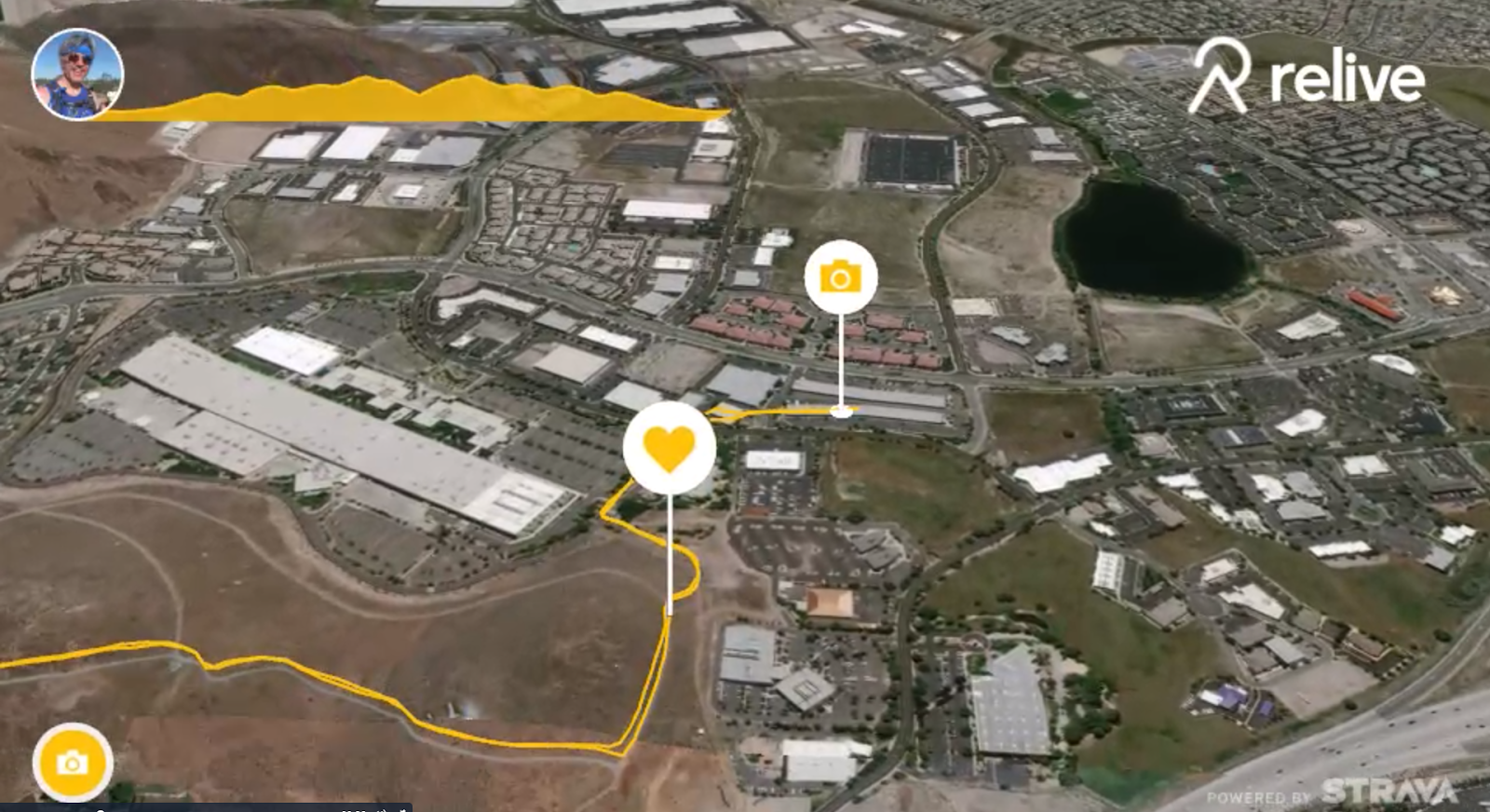
Relive 'Tuesday run before the gym'


The Road To Castle Peak begins...

After an intermittent hiatus after running the Dopey, it's time to begin Training for this year's main event, the Castle Peak 100k. This will be my 4th time running this event. Year 1, I came in 20 minutes under the time limit. The 2nd year, I came in around 20 minutes after the time limit. The third year, I dropped at mile 20, coming in to the aid station about 3 min before the cutoff. After a lot of reflection, I have become determined to not only complete this year's running, but to do so with at least 1-3 hours t spare. That means a lot of focus, a lot of cross-training, and a lot of hills.

There will be several other challenging events leading up to this, including The Broken Arrow Skyrace 52k, in June, and the Tahoe Rim Trail 55k, in July. Along the way there will be other great events, like Paiute Meadows, and The Ascent Dirt & Virt series.

See you out there!

Monday, July 23, 2012

A Glimpse of Heaven, a Taste of Hell, and a Journey back from the Dead.

The Tahoe Rim Trail Endurance Run motto is "A Glimpse of Heaven, a Taste of Hell."

The trails are tough, starting at Spooner Summit, running up to the top of Incline Peak with a small detour through the Red House Loop (the Taste of Hell), down into Incline Village, then back up to the top of Diamond Peak, then back to Spooner via Marlette Peak, and Snow Peak (The Glimpse of Heaven - at Snow Peak you can see Reno, Tahoe, Washoe Valley, Carson City, and probably Fallon..).

I caught many glimpses of Heaven, more than several tastes of Hell, and almost gave up at the 31 mile mark of this 50 mile race.

We arrived that morning with a few minutes to spare, and were able to see the 100 milers start. Talk about energy! We would see many of the 100 mile runners as they looped back while we were on out to Diamond Peak, and then again as we approached Spooner to finish. In what seemed like the quickest 60 minutes ever, we were soon toeing the line and starting out on our 50 mile adventure run.

The 100 Milers start.

Waiting patiently.

Into the unknown.
The trail was a gradual rolling uphill for the first 3 miles or so, and Patrick and I spent time shooting the breeze, and taking in the views. We caught up with some friends, and continued on to the top of Marlette Peak.
Jill and Marj looking great!

Marlette Lake
It's too early to start hallucinating...

An angel steers us away from the Devil and towards Hobart.


We soon hit Hobart Aid Station, making good progress, and feeling great. After a quick bite, and a fillup, it was time to climb some more, on our way to Tunnel Creek and the Red House Loop Beyond.
A Water Angel

On the second pass, they had Beer!

Onward and upward.
Trail continued on, through meadows and woods, and between and over boulders. It seemed to be a never ending uphill grind, but never too dispiriting. We got to see Dalius Kumpa as he was coming out of Tunnel Creek, 16th amongst the 100 milers! We rolled into Tunnel Creek, and back out towards the Red House Loop, which got really warm, and had a fairly steep descent. Downhills are great, except when you realize that it's the same trail back up again...
Just a minor step up.

Tahoe Behind me, as well as some nice uphill.

Patrick enjoys the descent.

More scrambling.

Into Tunnel Creek Aid Station.

We see Andy coming back from Red House. Go Andy!


An action shot for Patrick.
The Red House loop was hot, but there were a couple of creek crossings, and the water was both cold enough and deep enough that I could dip my feet, and soak my bandana to get a decent cool down. Oh, and did I mention I forgot that there was an aid station at the Red House:


UltraRunning. Serious Business.
After a few smiles, some water, and a bite to eat (the strawberry chocolate banana sticks were particularly delicious!) it was time to begin the arduous climb back to Tunnel Creek, then onward to the top of Incline Peak. Once we got to the summit, at 8800 feet or so, it was time for some well earned cruising back down to Diamond Peak. After all the climbing we'd done, I was glad to be able to cruise a bit, open it up, and even do a little rock hopping. That was fun.

Yep. More uphill.

4 miles or so of descent. Just what I needed.

The trail goes downward!

26 miles and still photogenic.
The run back down and into Diamond Peak was uneventful, but long. Once we hit the road at the bottom of the trail, it was a nice surprise to see Brandon and run with him to the Aid Station. I checked in with my crew Laura, met up with Michael who was going to be pacing Patrick and I for the rest of the run, and with Brandon along for the for of the 2 mile climb to the top of Diamond Peak, we were off.

Brandon waits to run up with us. He's already done this 3.5 times before. Little did he know that in a mile or so he would become my lifesaver.

I think water goes in this one.

Got Ice?
Up the hill we went. It's about 1700' vertical feet in a 2 mile climb, with several false summits. Arduous, but not impossible. We'd done the same hill during a training run a month earlier, and ran another 21 miles after the ascent, so I figured it would be challenging, and suck, but it would be over in about an hour and 15 minutes or so. My friend Tod, who'd done that training run with me, said "After 30 miles, you're going to get to Diamond Peak and just laugh."

Tod Lied.

The first mile went about as well as can be expected, but soon after it turned from steep fire road, to just steep.


At the one mile mark, I started getting nauseous. I pulled over into some shade, and Brandon, who was just going to run us to the top, advised me to stop and just try and recover for a few minutes.
Assessing the situation.

 It didn't work. I started feeling even worse. I told Michael and Patrick to keep going. After a few more minutes Brandon knew that I was going to need more time. He kept making me drink water bottle after water bottle, and gave me his water when mine was depleted. He ran to catch up to Michael and Patrick to tell them to keep going; he was going to stay with me. He returned and we stayed there for about 1/2 an hour. The whole time, he kept telling me it was ok that we had stopped, he kept assessing my situation, and made sure I was getting better. After a while, I felt ok enough to try and slog some more. About 20 feet from where we started, I couldn't move. My quads cramped so hard, my legs were like two planks. I could not bend my knees at all. This had *never* happened to me before. I've had cramps, stiffness, etc, but never nearly this debilitating. It was at this point I was ready to give up. But how do you do that when you are literally halfway up from and easy ride home, but an incredibly difficult descent, or halfway down from the top, and being more than halfway finished from the race? Another factor was that as nearly impossible as it seemed to be able to even consider being able to walk back down without serious injury, getting to the top and quitting meant waiting several hours, and probably having to hike anyway - that aid station was inaccessible by car... All of this flashed through my mind for several seconds, and when I told Brandon what was going on, he directed me to the next shady patch about 50 feet up the hill, had me sit down again, and drink lots more water. We waited about 20 more minutes, while Brandon formulated a plan: Get me to the top, have me sit and drink as much fluids as I could, and then get me to the finish in survival mode. If he hadn't have been there, I don't know what I would have done. He became my brain, and I let him do all the thinking for me. He told me to climb to the next shade patch, and I did. He told me to sit and drink, and I did. He told me to take as much time to get to the top as I wanted, and I did. Step by step, I got to the top, then walked into the aid station.
In the background you can see Brandon talking me into getting to the next patch of shade. They were few and far between.
 Two bottles of water and electrolyte in me, I started feeling better. We left the aid station and started the 18 mile shuffle back to the start. Every aid station became an exercise in hydration, as I drank as much water and electrolyte as I could. Did I mention that I hadn't peed since mile 25 or so?... Brandon set a great cadence, and kept reassuring me that I'd finish below 16 hours, and everything was good. He told me stories. He gave me advice. He was incredible. We also saw Dalius at some point out of Tunnel Creek, and he was looking as fresh as he did when we saw him the first time!

I think this is around Marlette Peak.

Snow Valley.

Brandon leads us to Snow peak, 9200' elevation.


Sometimes Brandon let me lead. :-)
As we continued, sometimes running, sometimes walking, I started passing people who'd passed me on the Diamond Peak ascent. I have to tell you, that felt good. Really good. We got into Hobart where I had water, food, a strawberry boost smoothie (delicious and COLD), and a snort of beer (Don't Judge me). Brandon stayed behind a few minutes and had a burger. (They smelled awesome, but he regretted that decision later). We went up and over Snow Peak, down into Snow Peak aid station, where I had some soup and learned that the grit that I thought was in my shoes were actually two very large blisters on the bottoms of my feet. No Bueno. But we had a little more than a 10k to go (7 miles, but who's counting?). On we went.

The descent took forever. My Garmin had died at mile 38 or so, and Brandon wasn't calling out the miles (probably a good thing anyway), so we just kept on keeping on. At two miles to go, I knew that I was going to finish after the sun set. Brandon had said "You're going to lead the last stretch in, and you can suffer if you want, or walk if you want, it's up to you." I felt ok, and could keep up a decent jog, so I tried to run it in. Until, the sun finally descended and it truly got dark. At about that same time I'd ended up behind a girl who was run/walking a similar pace, and who didn't have a light source. I shined my flashlight ahead of her and asked "Is this helpful or annoying?" She stated that it was helpful, so I stuck with her for the last mile or so, and split near the finish where she met up with her pacer, and I took off towards the finish. To my surprise, Patrick and Michael were still waiting for me! I got my plaque, reunited with Laura, shook hands, patted backs, and hugged all around. And then ate the best tasting chicken burrito I've ever had.

No Cholula?!?!

Time to dine.


Done.

The next day, I celebrated by having a taste of my new HomeBrew in my shiny Pint Glass.
Best Beer Ever.

My Running Reset

 Without going into my decade+ of running in great detail, let me related the TL;DR version: At the end of 2009 I was 235lbs, and tired of i...

Calendar